
Apple Presentations Have Always Been Something Special to Me
My journey to WWDC 2023, from getting an invitation to experiencing Apple Park, meeting the Vision Pro, and everything in between
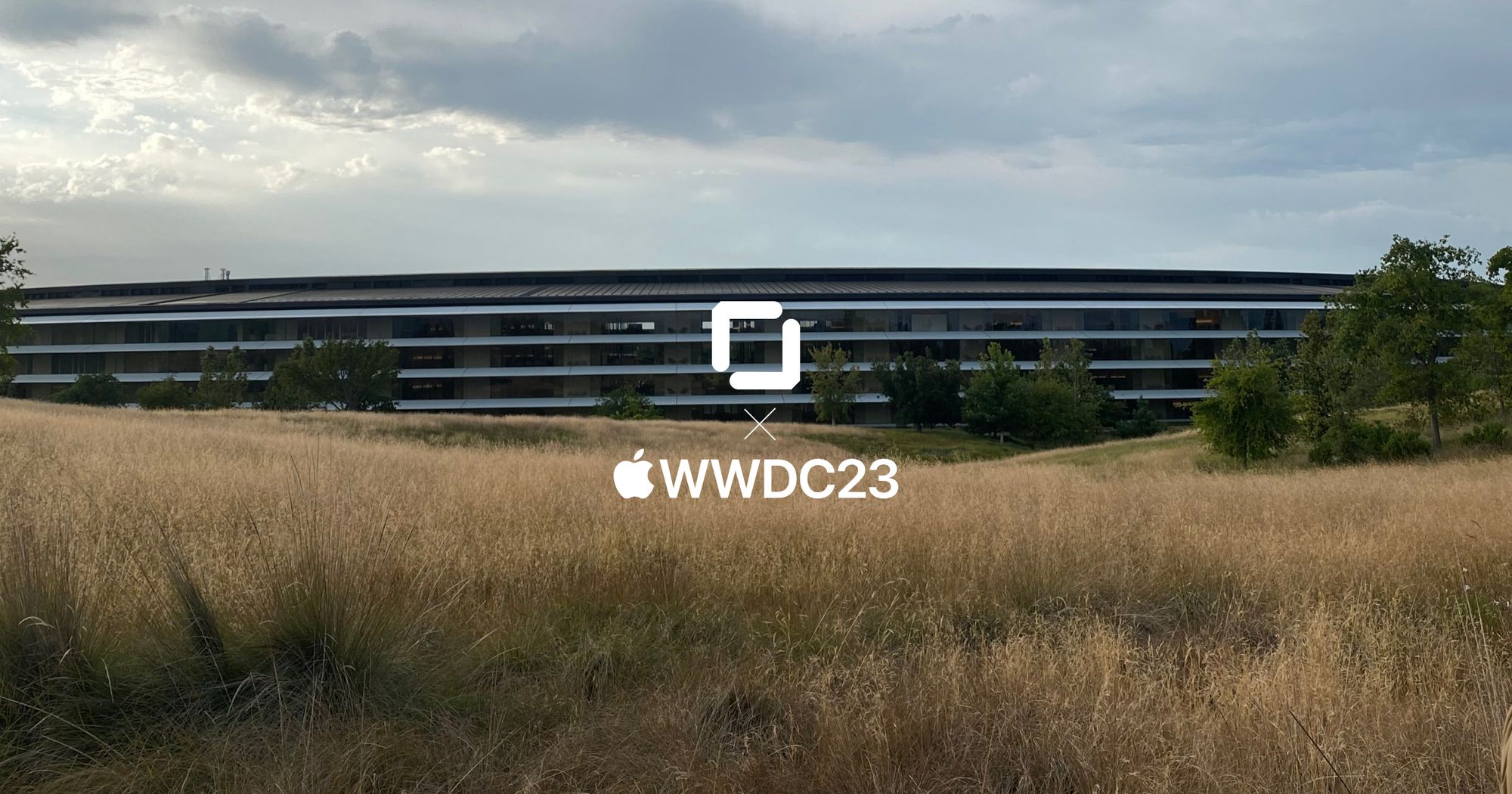
Every year since 1983, Apple has hosted a conference for developers across its platforms — the Apple Worldwide Developers Conference. This year, Open Media’s lead designer Sergey got to attend WWDC in person, and decided to write about it.
He covers everything: how to get an invitation, what the day looks like on the ground, and yes — what they serve at the café.
How to Get an Invitation
Apple presentations have always felt like something special to me. I’ve pored over their website and design guidelines more times than I can count.
So when the event was announced, I applied without a second thought — and then promptly forgot about it. When the invitation actually came back, I was genuinely shocked.
The process this year was straightforward:
- Have an active developer account.
- Catch the application window — about a week long, opening right after the official announcement.
- Fill out a simple form and let Apple’s random selection do the rest.
After that, you have until a set deadline to confirm. I sat on it for a long time. I had no visa, no real plan for getting one, and — honestly — I’d somehow convinced myself the whole thing would be online anyway. That I’d just fly out to watch a livestream from the Visitor Center store.
I nearly let the deadline pass. But my wife Ksyusha and a few colleagues talked me into at least trying.
Visa
The tricky part was that Apple never sent an official letter or invitation — nothing I could attach to a visa application.
So I wrote them. My thinking was: if they reply, I’m going. A few days later I heard back from Esther Hare (Senior Director, Developer Marketing, Worldwide Developer Relations), with an official document confirming my invitation and an offer to help expedite the visa process.
At the interview, they didn’t even ask about the conference. But getting that letter on official Apple letterhead meant something — it made me feel like the company genuinely cares about the people in its developer community.
The visa came through. Everything moved quickly and warmly. We picked up our passports just a couple of days before the flight, still scrambling for affordable tickets.
Big thanks to Sasha and Mitya for stepping in and pointing me toward Google Flights — it’s remarkably fast, and surfaces combinations you simply won’t find on Aviasales or Skyscanner.
Conference Day: There Was a Feeling of Belonging and Excitement
Flying in the day before the conference was not a smart move. I’d always assumed jet lag was overblown — until I flew this far for the first time.
Conference morning: we were up before four. But we still managed to pull ourselves together and find coffee and donuts at a wonderfully strange café that looked like it was frozen in the first season of Twin Peaks. We were staying in Santa Clara, about a twenty-minute bus ride from Apple Park.
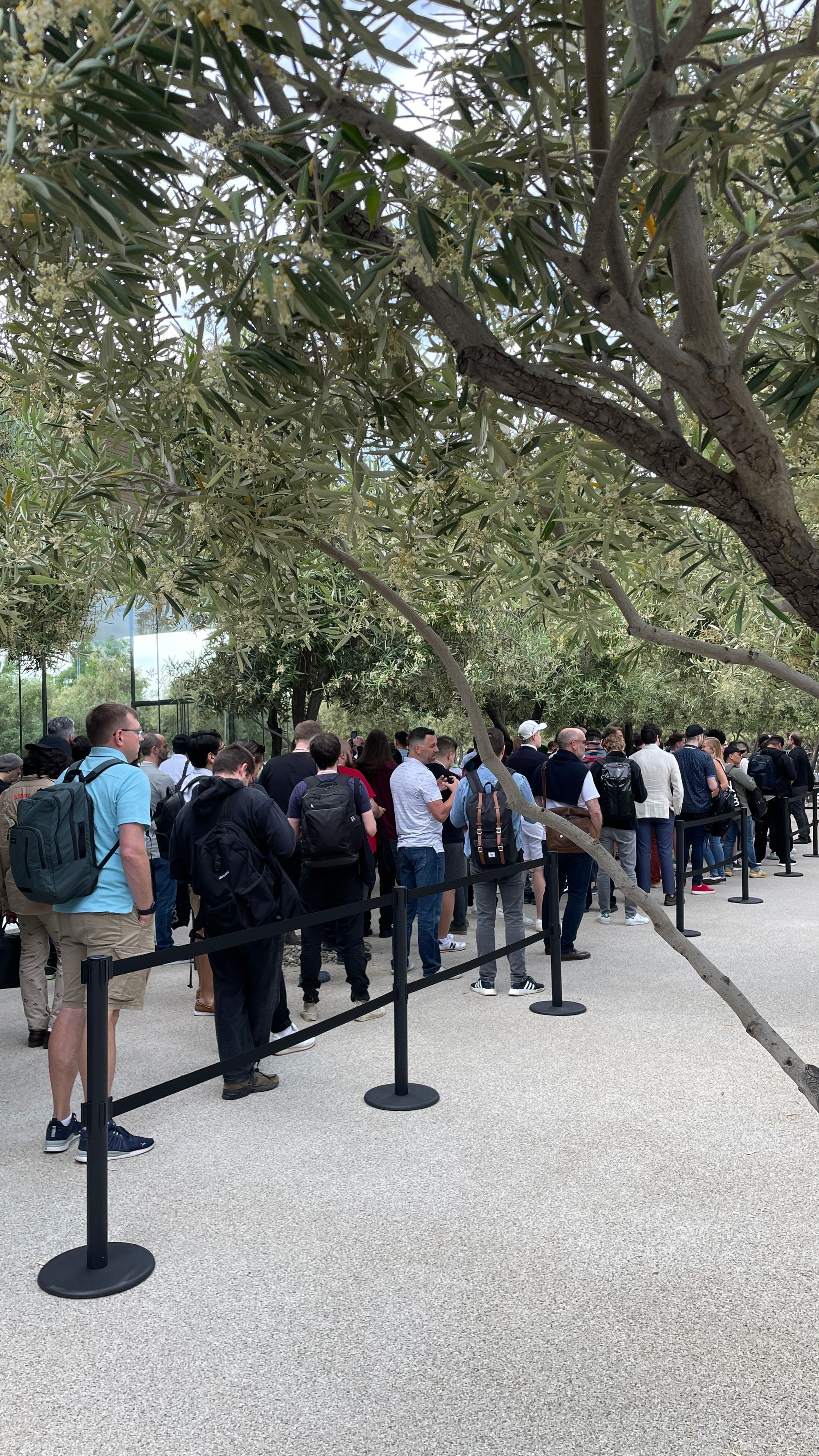
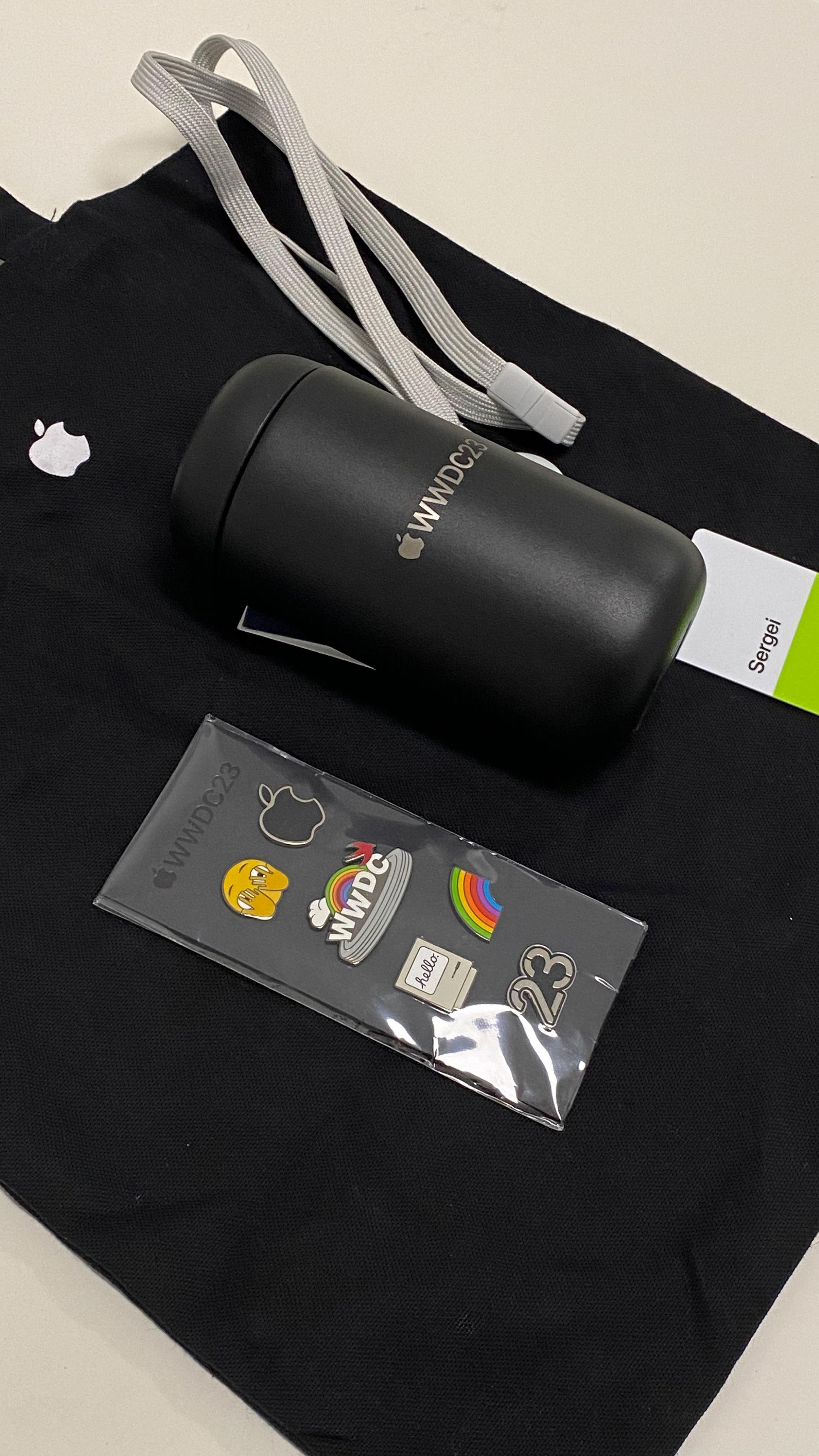
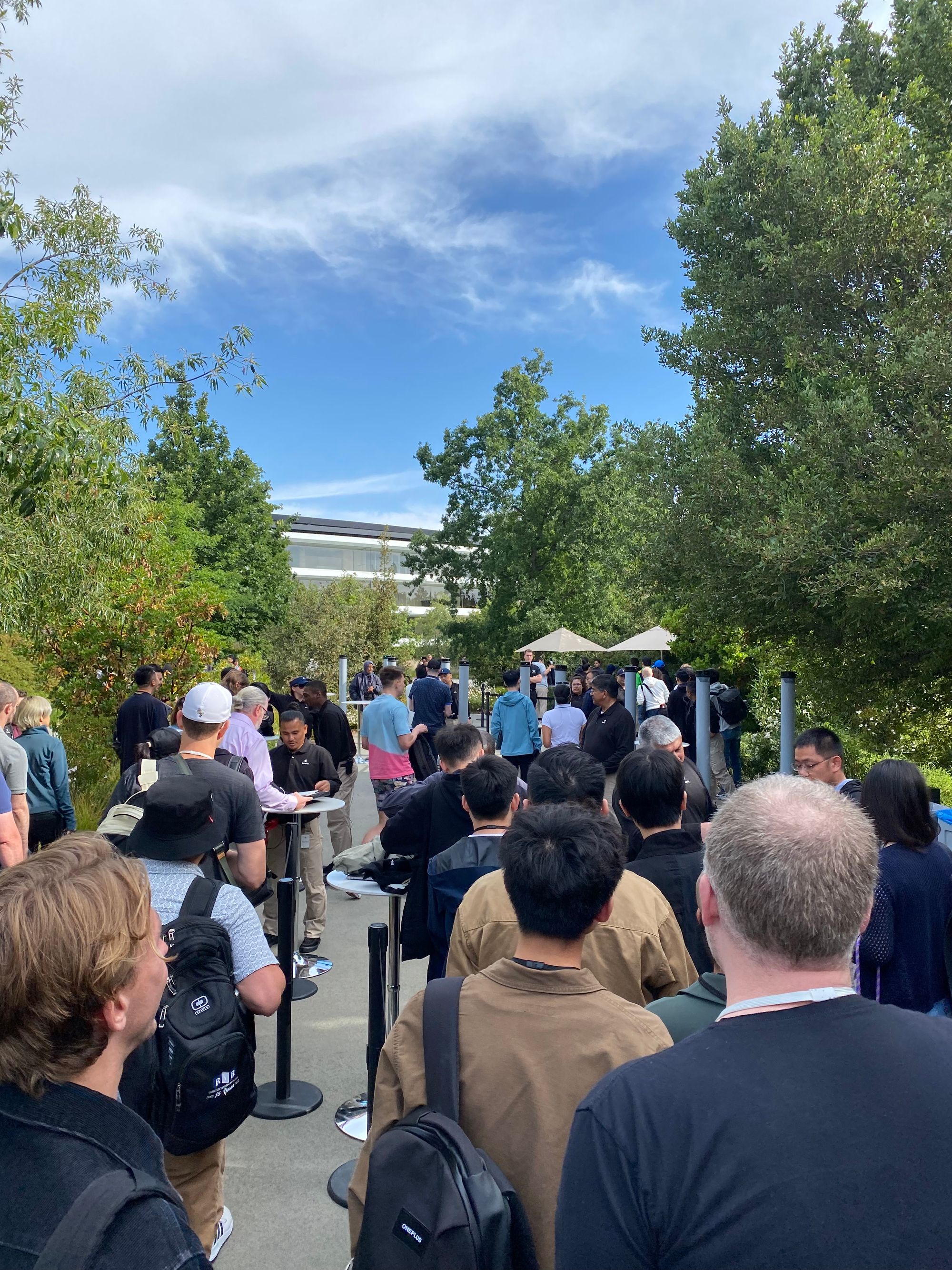
We showed up early — around 7 AM — and there was already a line. But everything ran smoothly: documents checked, badges handed out, a bag of promo materials pressed into your hands.
Inside Apple Park
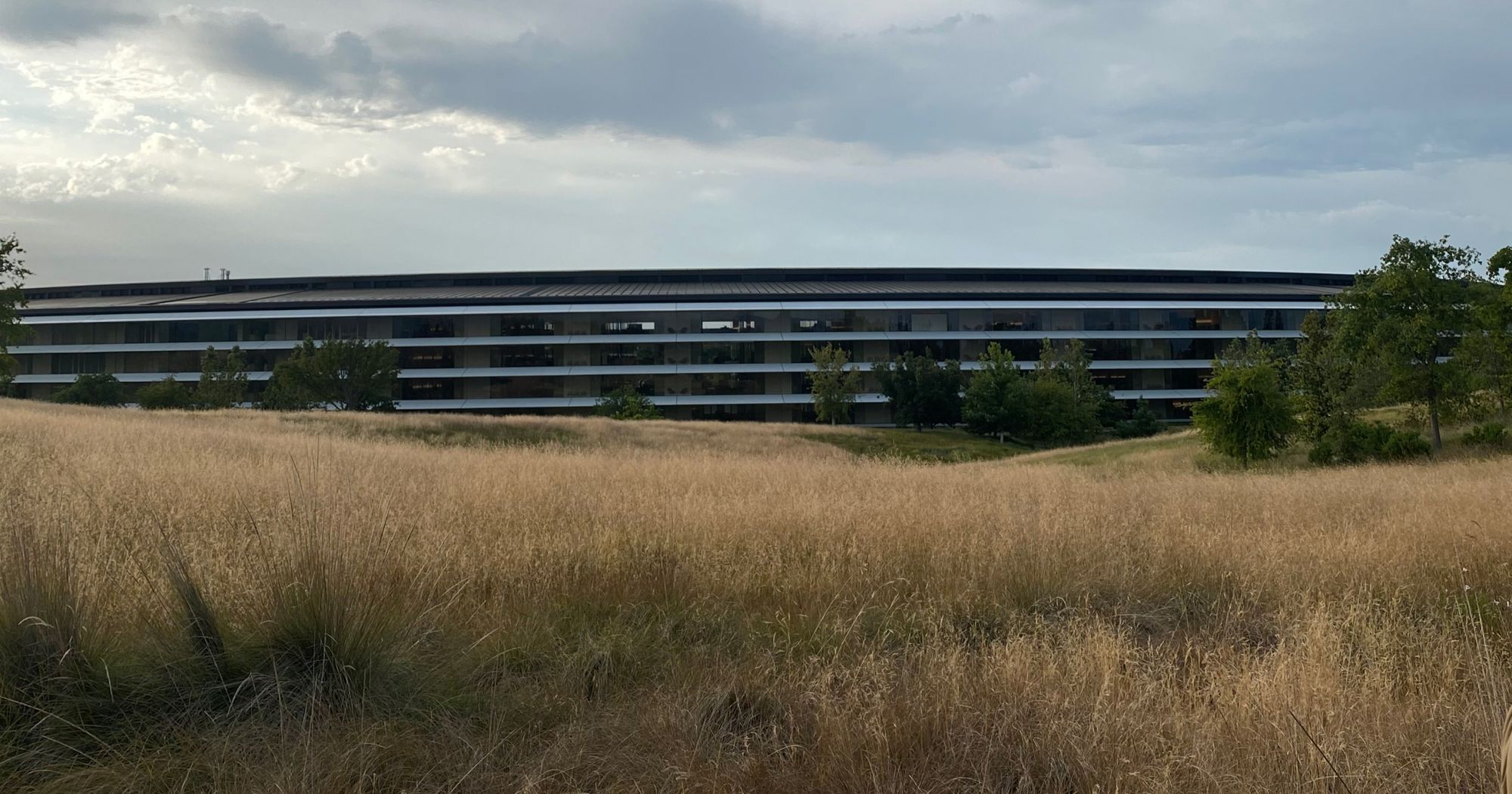
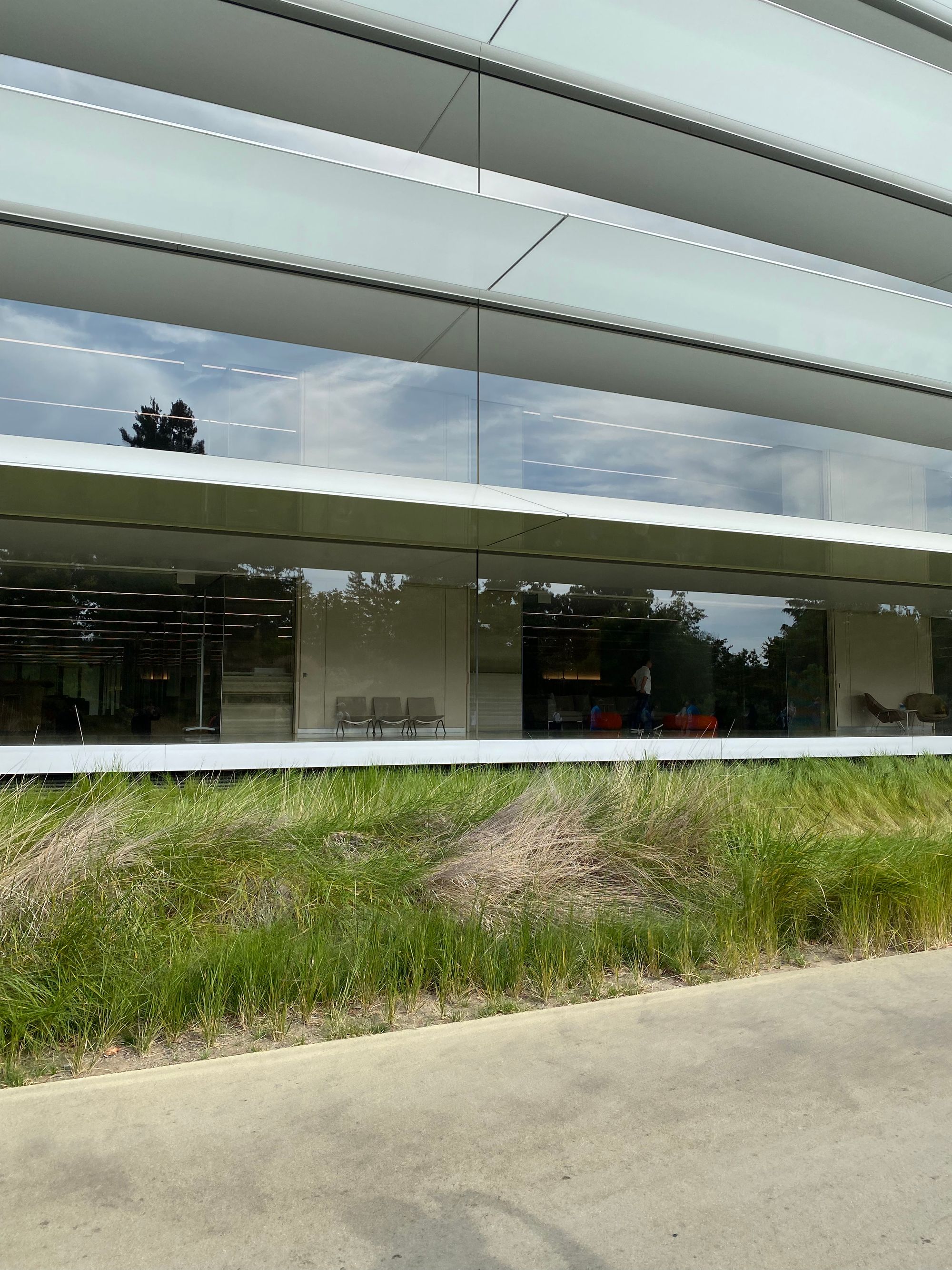
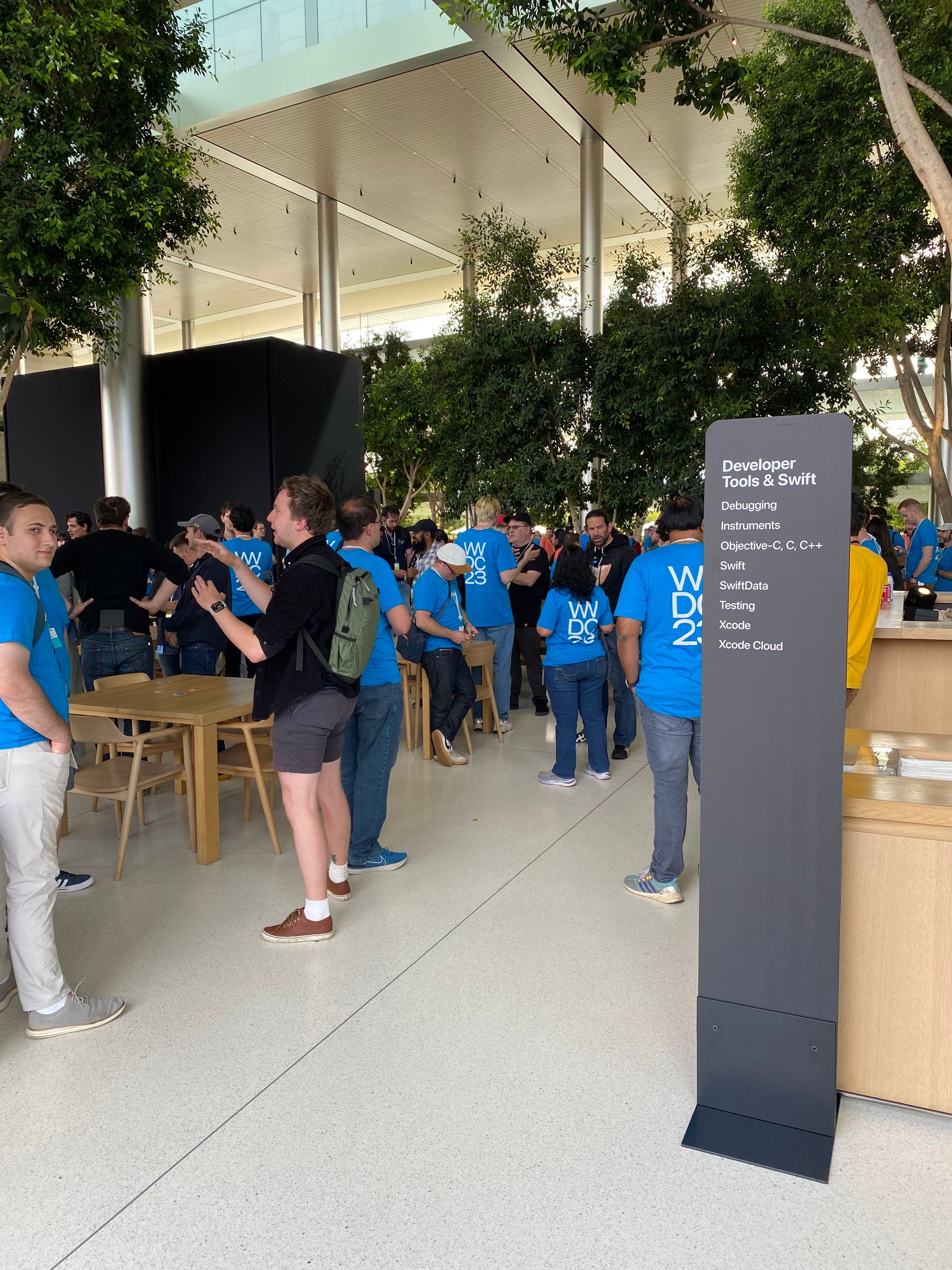
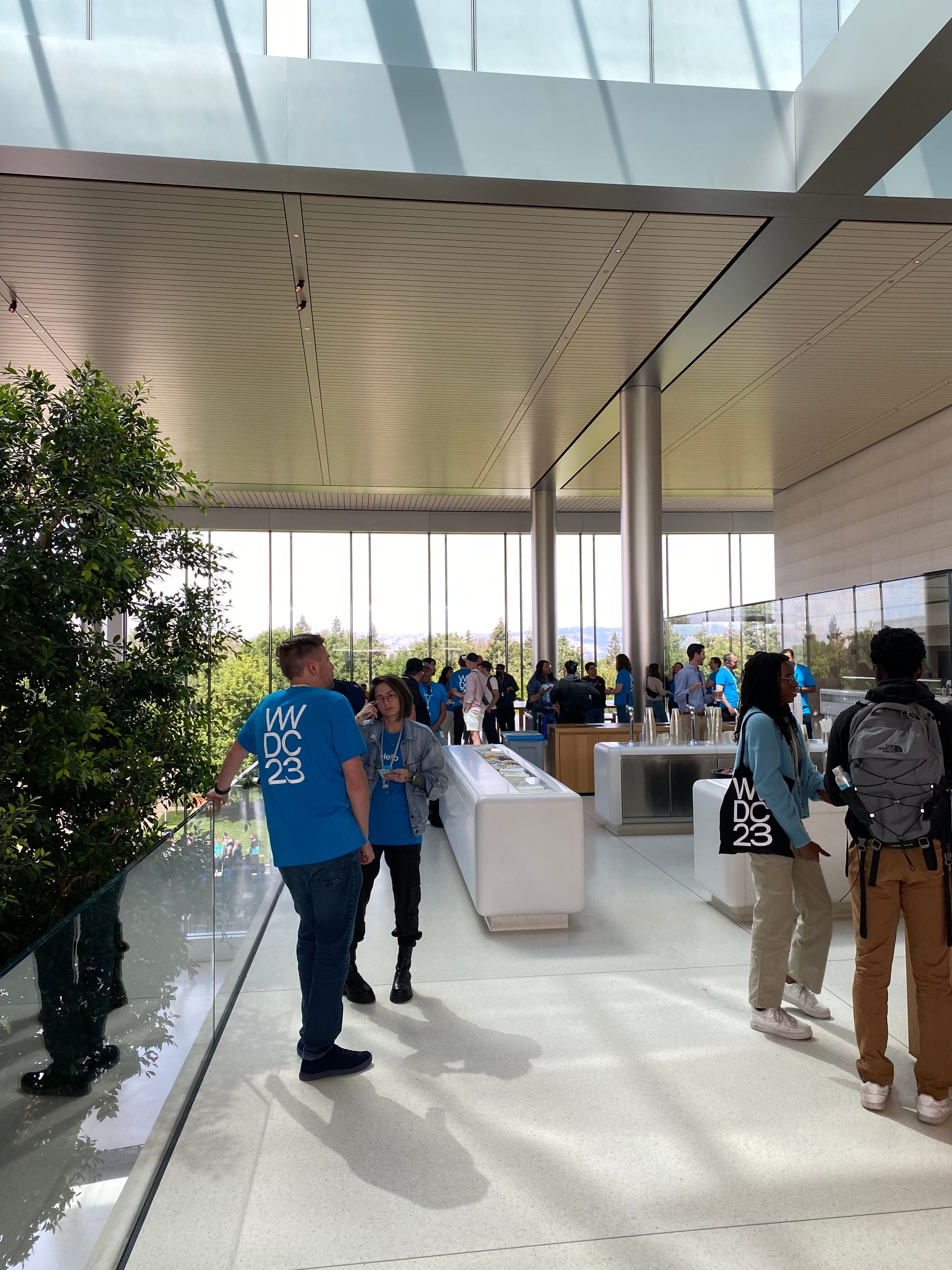
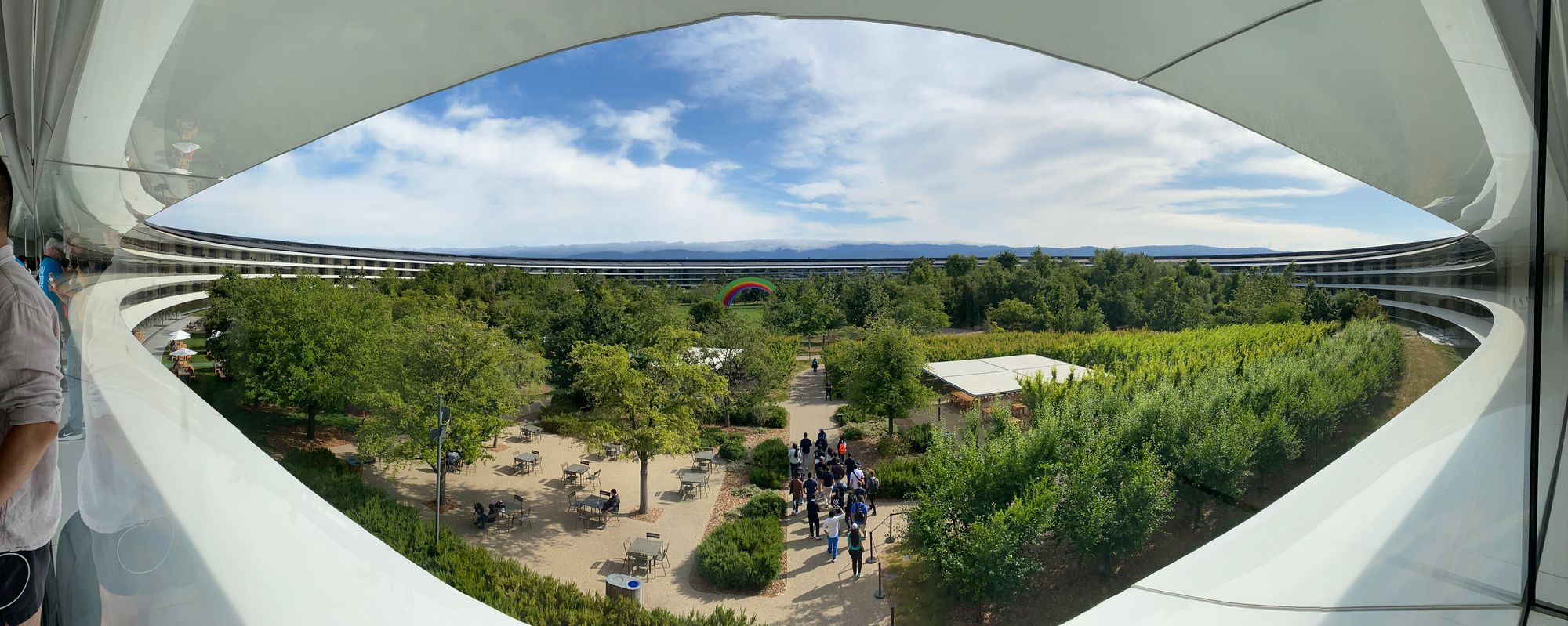
The campus is stunning. Every detail has been considered — from the landscaping to the architecture. The main ring-shaped building is as impressive in person as it looks in photos, and the café that kept us fed throughout the day deserves its own mention.
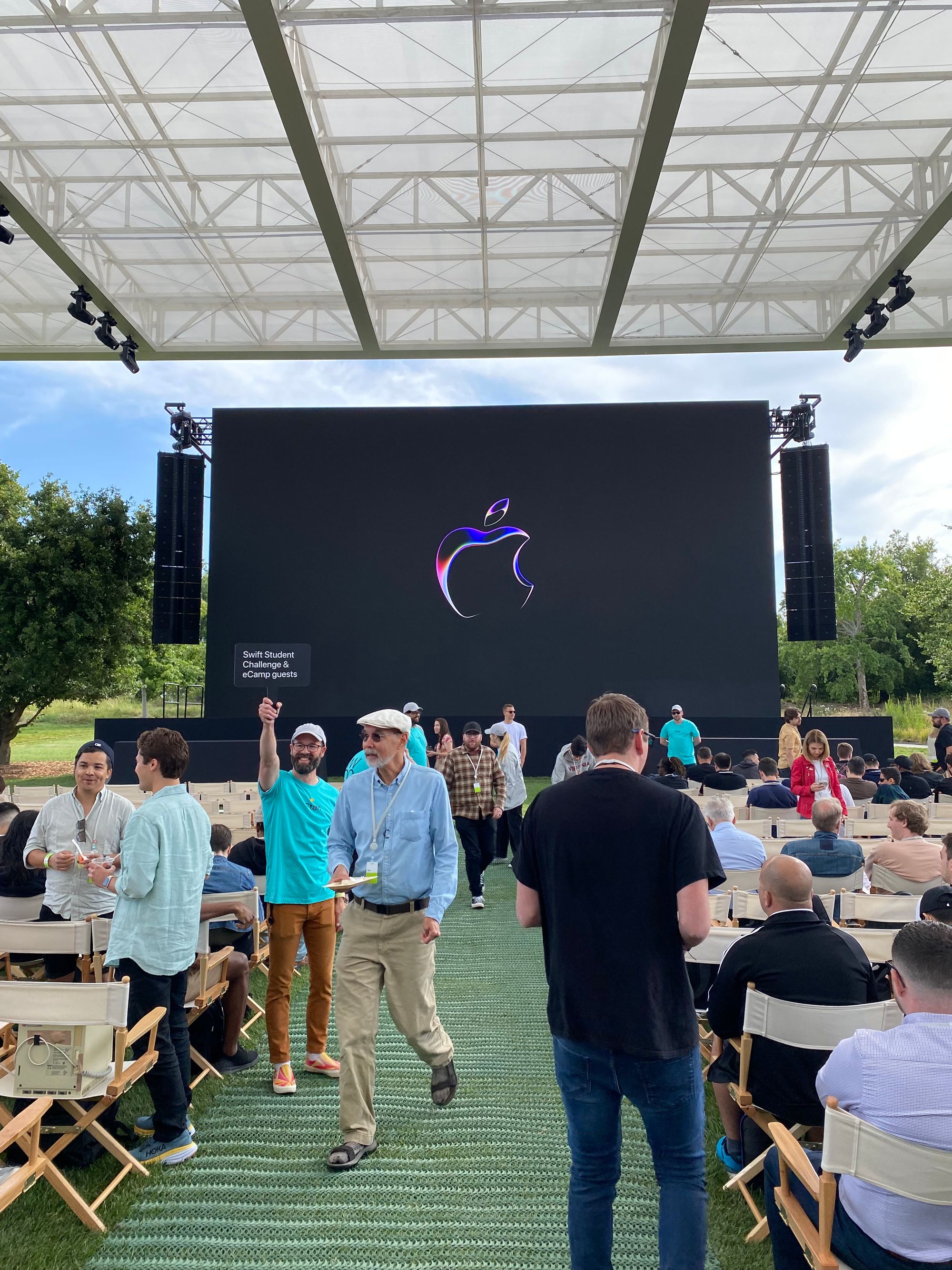
The keynote was the same one that streamed online, but being there in person was a completely different experience. You felt the energy of the room, watched other developers react in real time, and were caught up in something that’s hard to put into words.
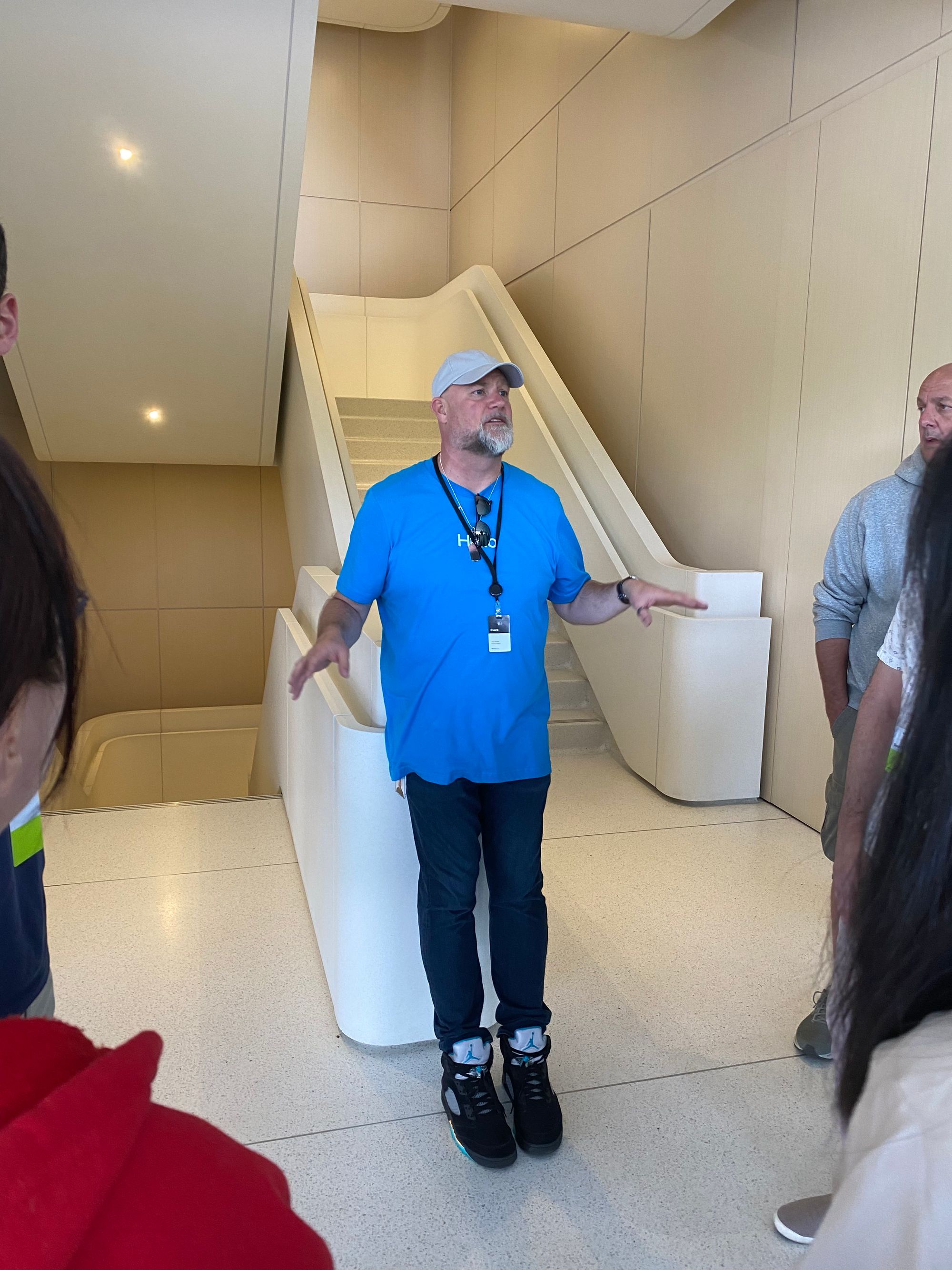
The seating was comfortable, the acoustics were perfect. Even the volunteers impressed me — many seemed to be engineers themselves, directly involved in making the whole event run.
There was also a snack break — popcorn, fruit, various treats — followed by the Apple Design Awards ceremony.
The Keynote Experience
Walking through the park and around the ring with other attendees, we made our way toward the enormous outdoor stage — the one that opens seamlessly into that legendary café. Music was playing, the energy was good.
Key Announcements
The main announcements of this WWDC were:
- iOS 17 with new messaging features and interactive widgets
- macOS Sonoma with new screensavers and enhanced Safari
- Vision Pro — Apple’s entry into spatial computing
- Mac Studio and Mac Pro with M2 chips
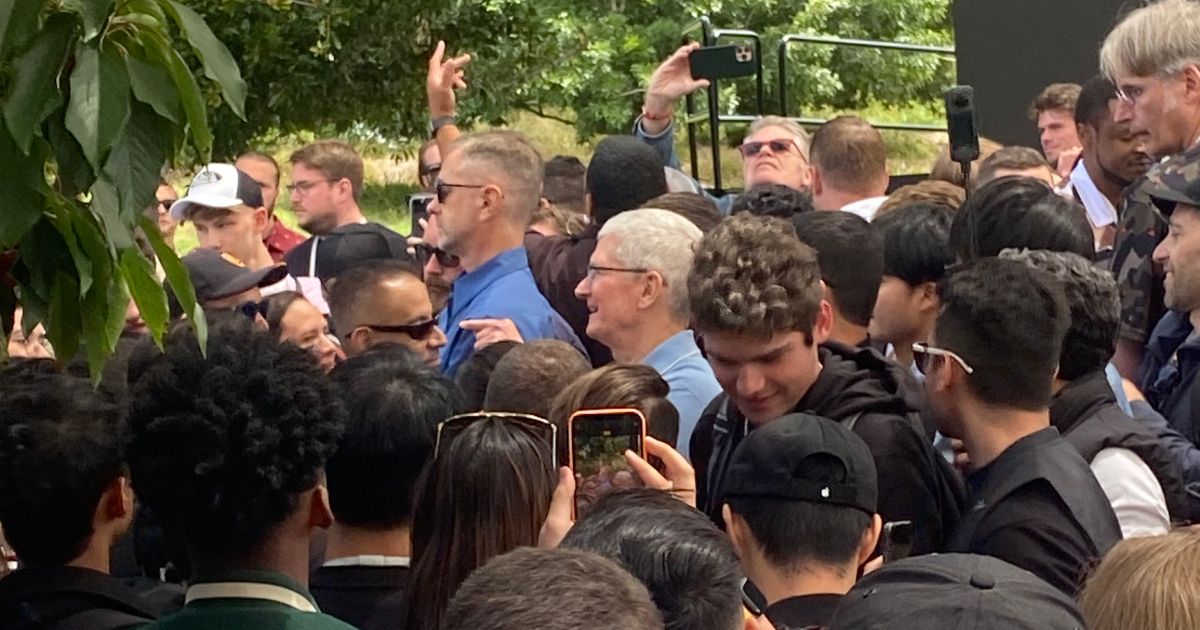
But honestly, everyone was waiting for one thing — the Vision Pro announcement. And when Tim Cook finally said those words, the entire theater erupted.
Vision Pro: First Impressions
What struck me most about the Vision Pro presentation wasn’t just the technology itself, but how Apple positioned it. They didn’t call it VR or AR — it’s “spatial computing.” This framing immediately sets it apart from everything else on the market.
The demo videos they showed were incredibly polished, as you’d expect from Apple. But what impressed me more was the confidence with which they presented a $3,499 device. Only Apple could announce a product at that price point and have people genuinely excited about it.
Behind the Scenes
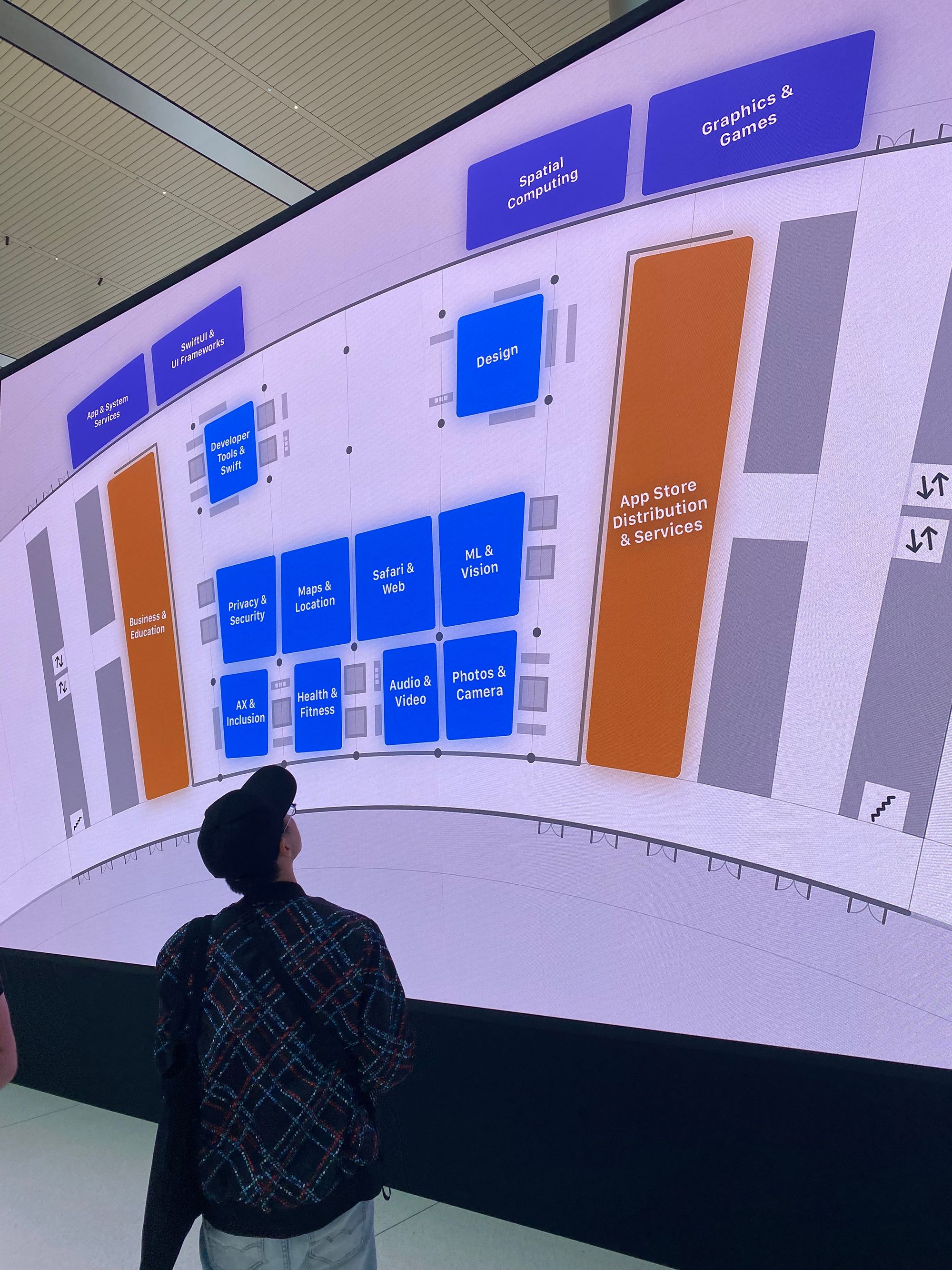
After the keynote, we had access to various labs and sessions. These were much more technical and focused on specific development topics. The Apple engineers running these sessions were incredibly knowledgeable and patient with questions.
Lunch at Apple Park
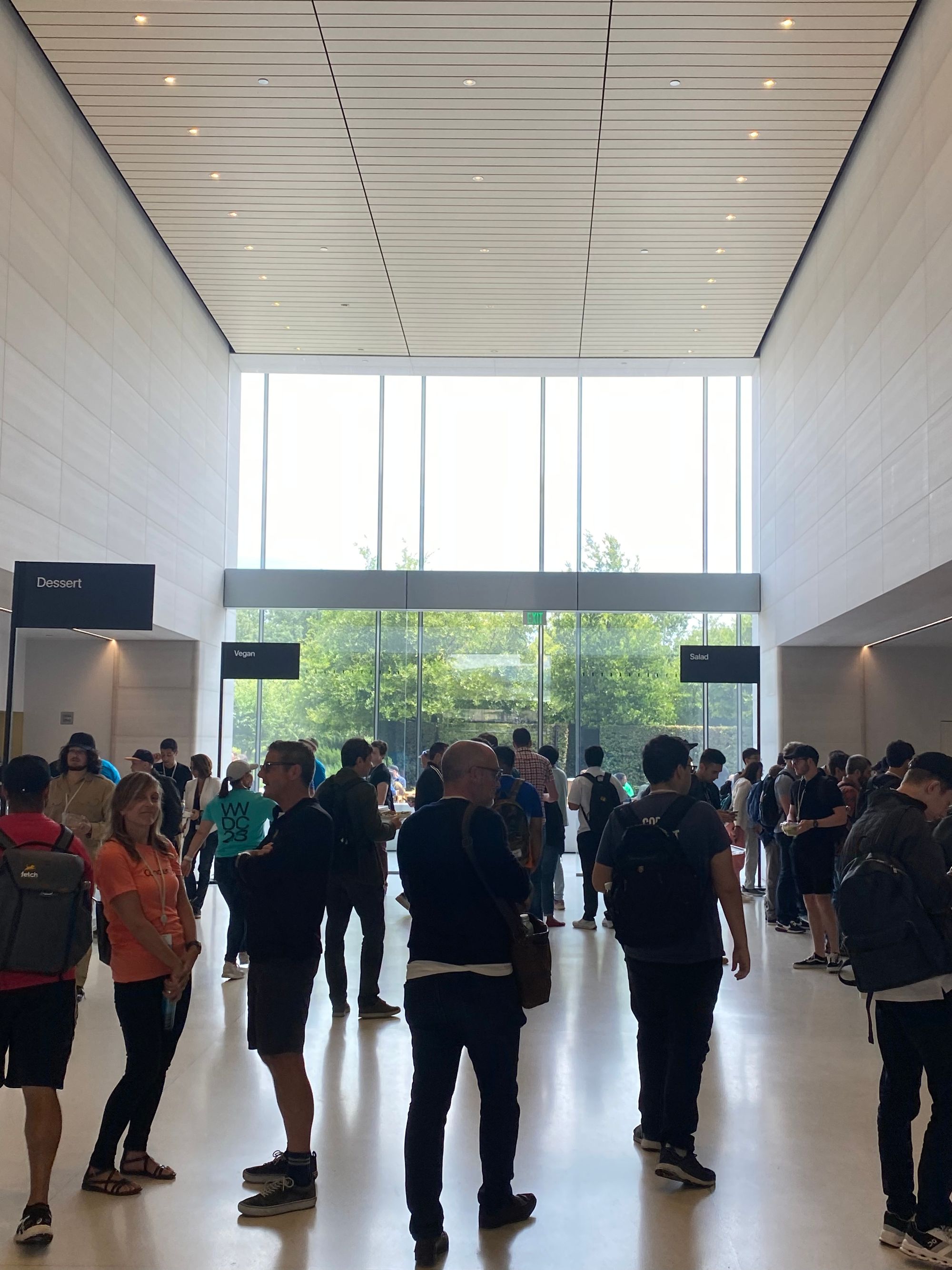
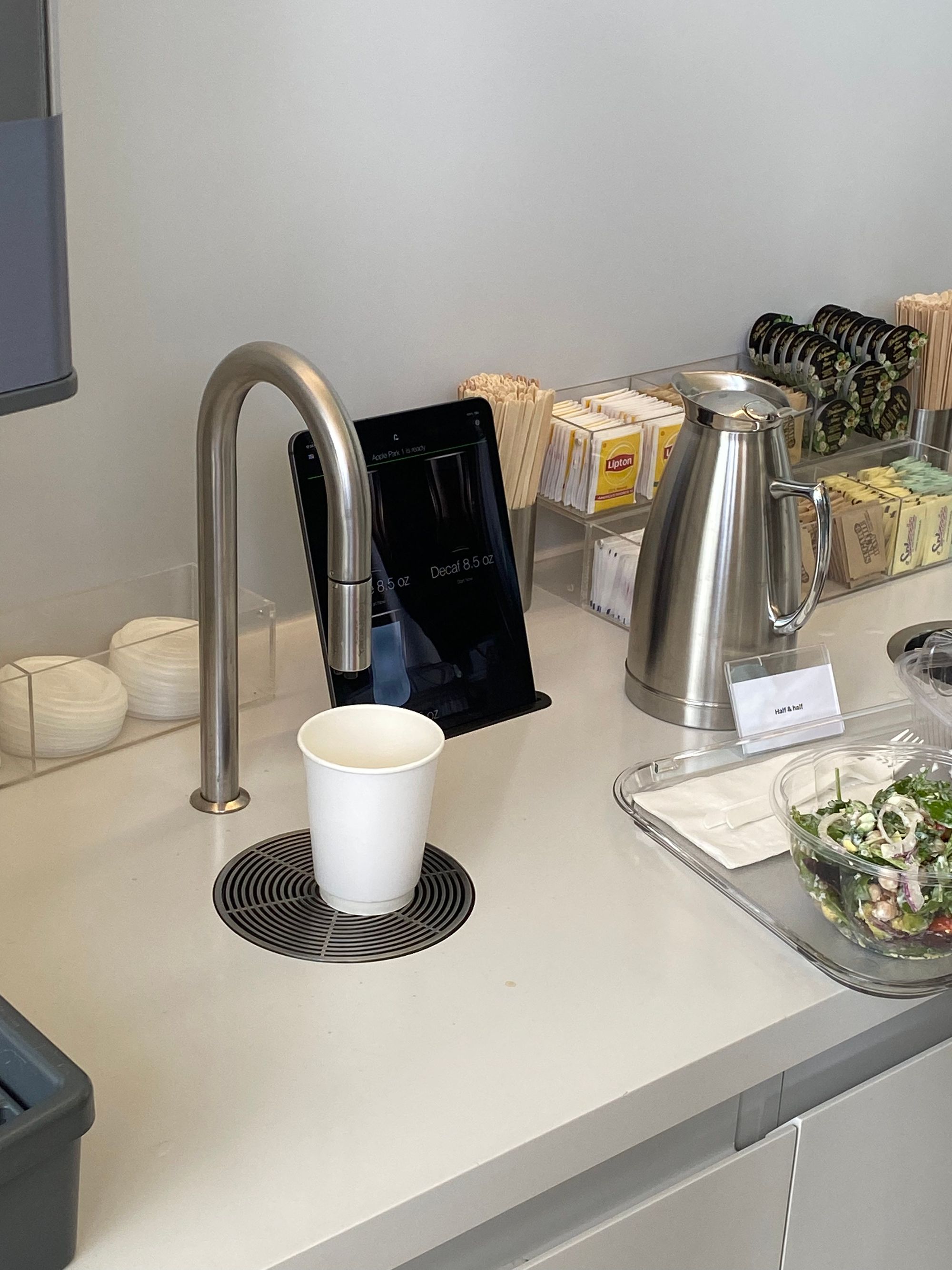
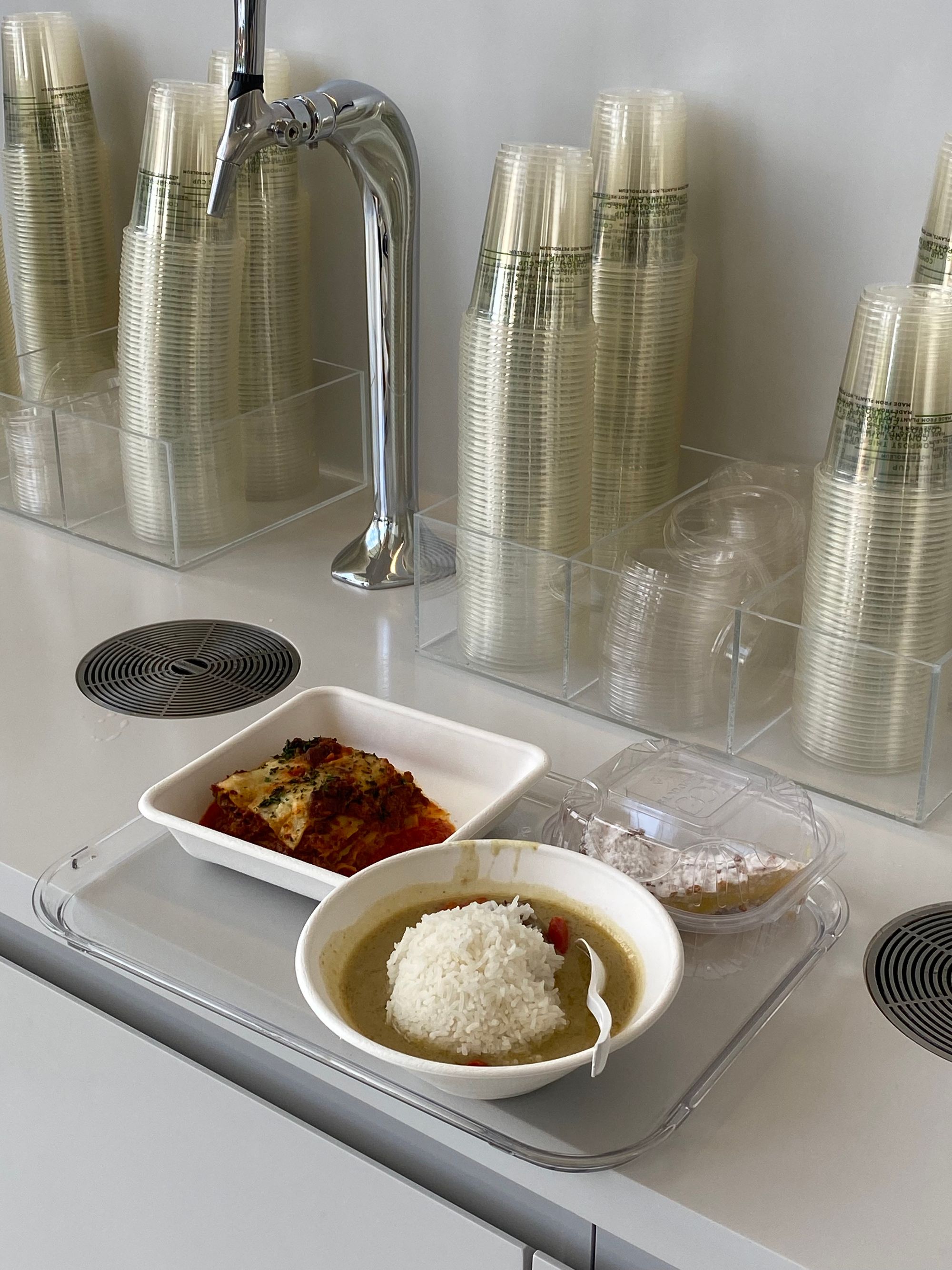
Lunch was genuinely impressive — multiple world cuisines laid out side by side: Japanese, Italian, and plenty more. Everything was excellent.
The Labs Experience
The hands-on labs were where the real magic happened. You could:
- Get one-on-one help with your apps
- Ask questions directly to Apple engineers
- See new APIs in action
- Get feedback on your design and implementation choices
I spent most of my time in the design labs, discussing interface patterns and getting feedback on some of our projects at Open Media.
Meeting Fellow Developers
One of the unexpected benefits was meeting developers from around the world. The diversity was incredible — from indie app developers to teams from major tech companies, all united by their passion for creating great software.
Our founder Slava started his career in interface design — and that background has shaped everything about how we think about our products.
In the nearly eight years since I first met him, I’ve never stopped being impressed by his aesthetic instincts and attention to detail. Without that influence, I’m not sure I would have grown into the designer I am today, or learned how to make complex interfaces feel genuinely simple. I’m hoping that in a couple of years, we’ll be back here for an award of our own — maybe for Waveroom or LALAL.AI.
Apple Design Awards
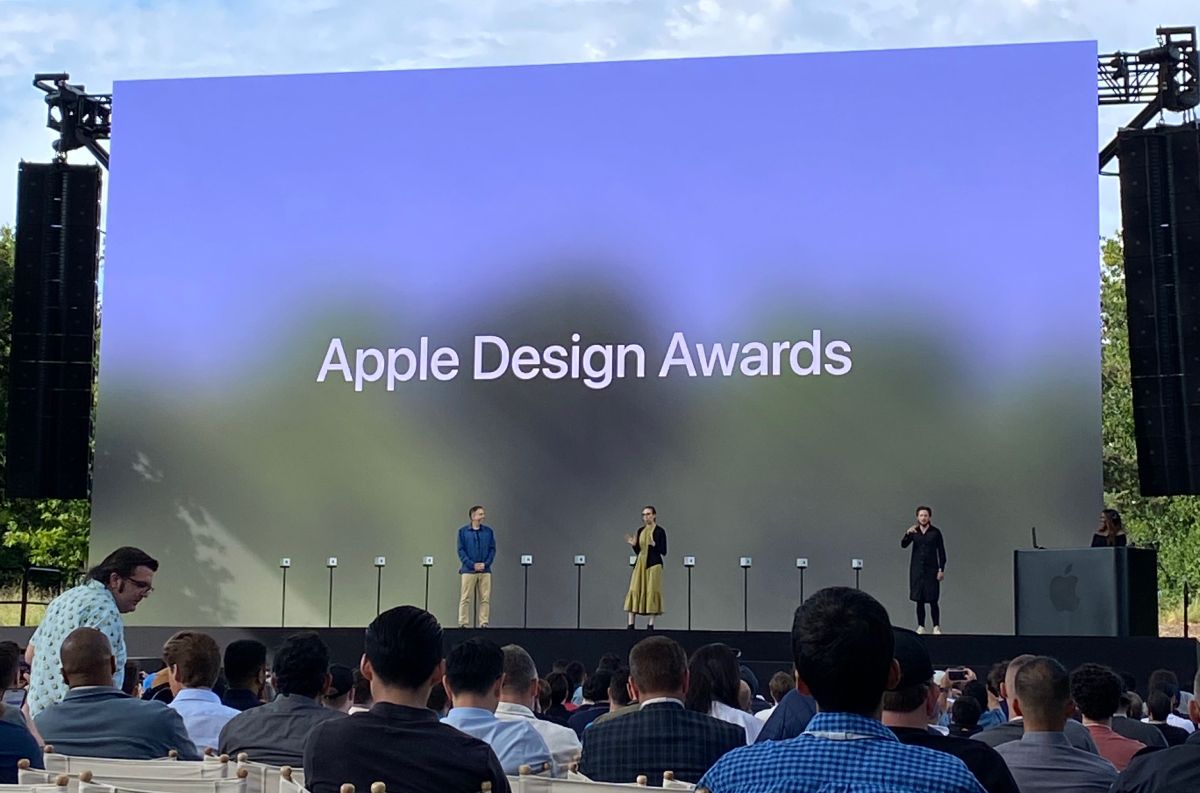
Here’s a small bonus for lovers of interesting UI solutions and attention to detail.
Steve Jobs Theater
I kept asking volunteers where I could actually see the new glasses. Nobody knew anything. The official schedule had nothing listed either — except for a single entry at 6:00 PM: “Special evening event.”
My imagination ran wild. I thought: if this turns out to be a party with Billie Eilish or Philip Glass, this trip will officially become one of the most memorable experiences of my life.
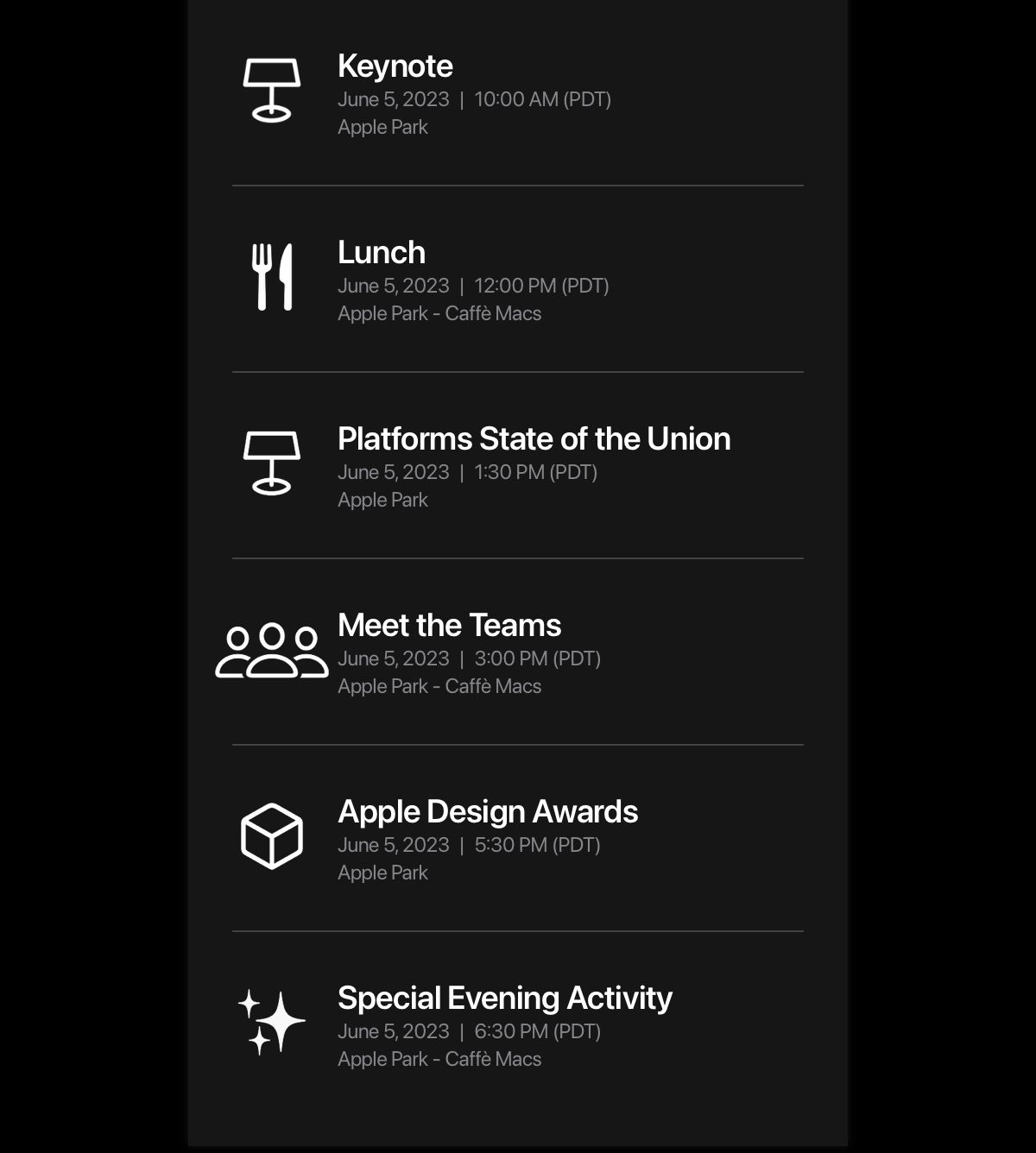
About half an hour later, they began leading us out in small groups of 25. Employees lined the entire path, coordinating and thanking everyone — but no one said where we were actually going.
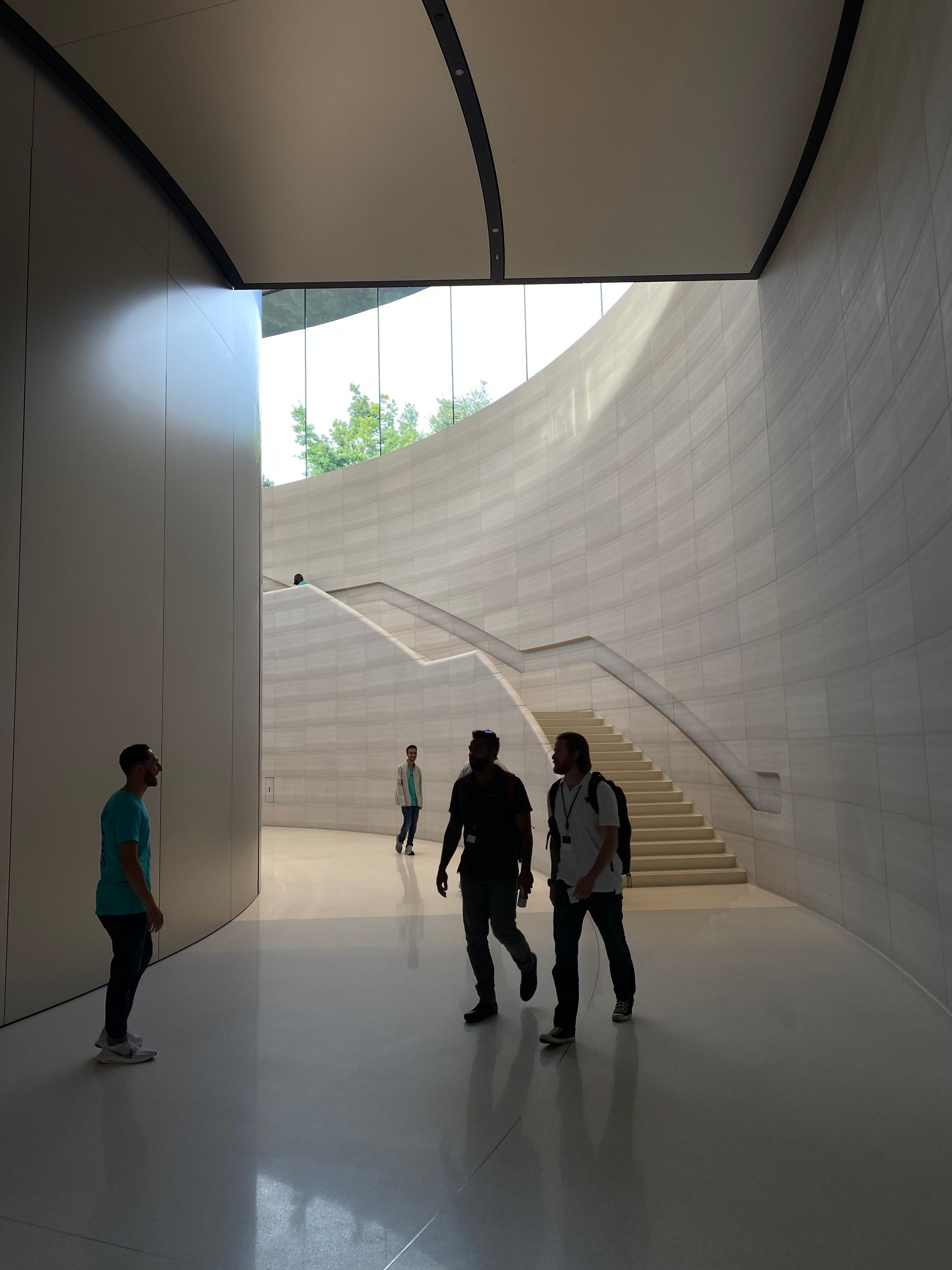
When we passed through the exit, I realized we weren’t leaving. We were heading to Steve Jobs Theater — the highest point of Apple Park, where every major product announcement had been made.
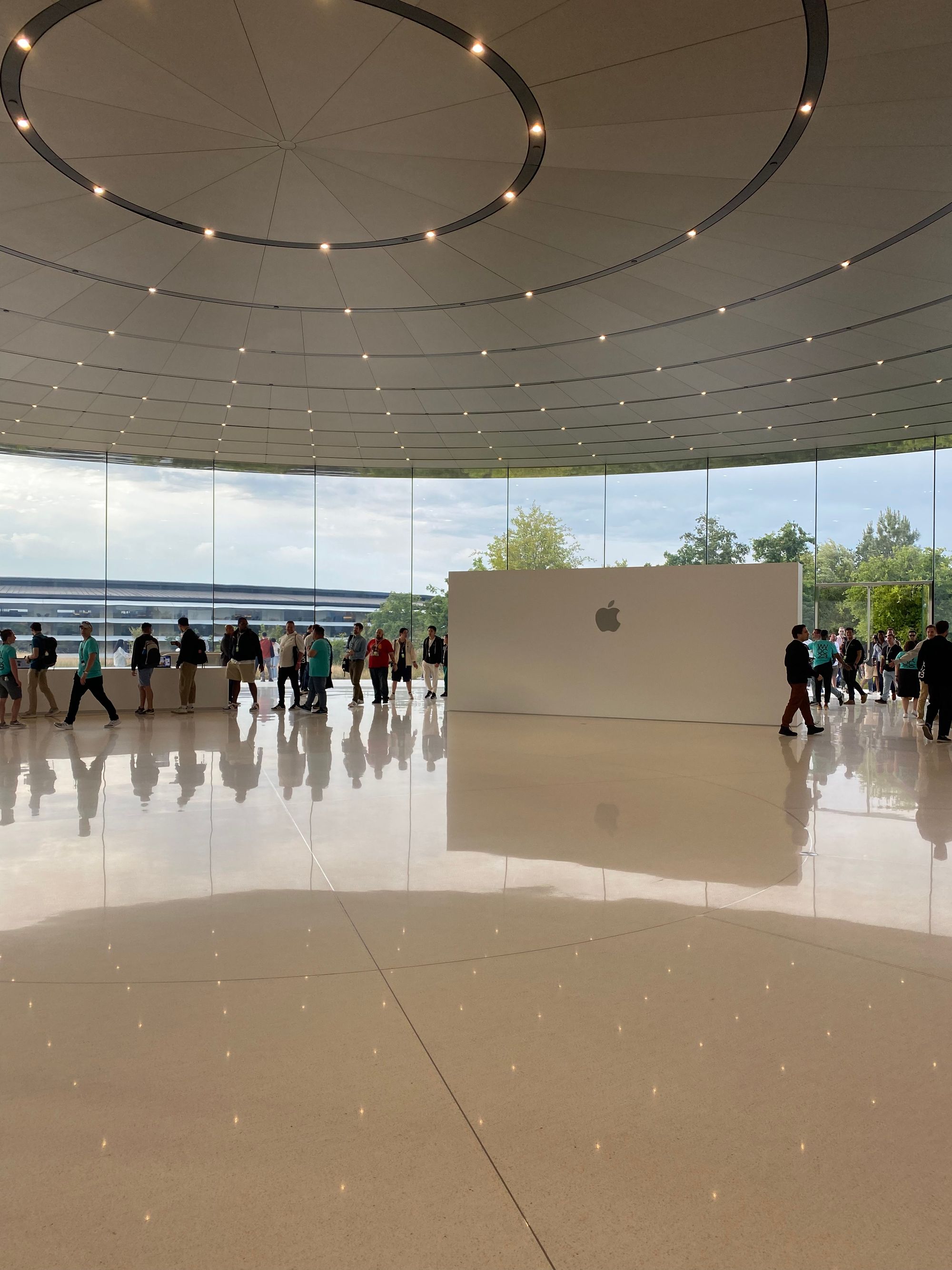
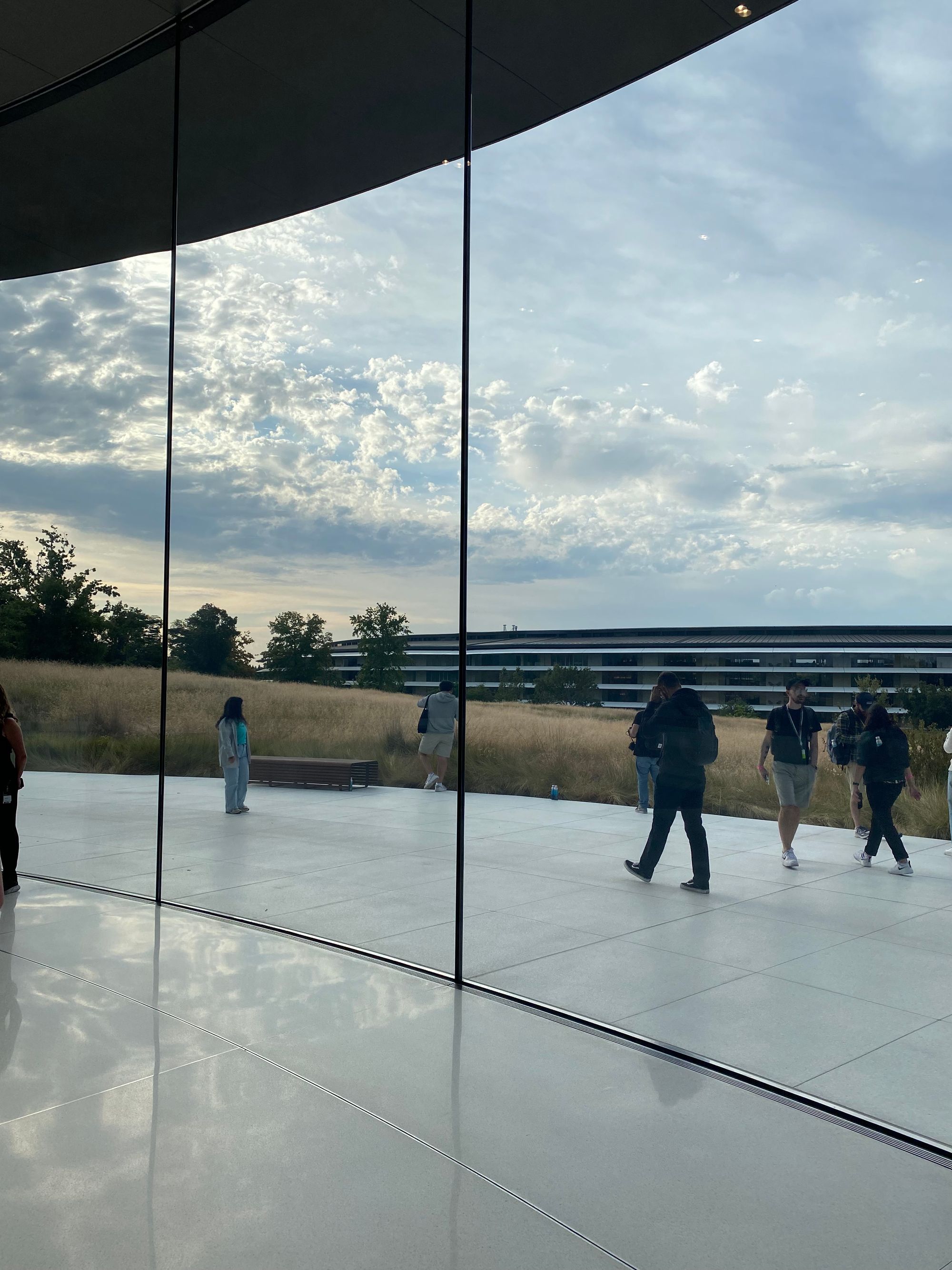
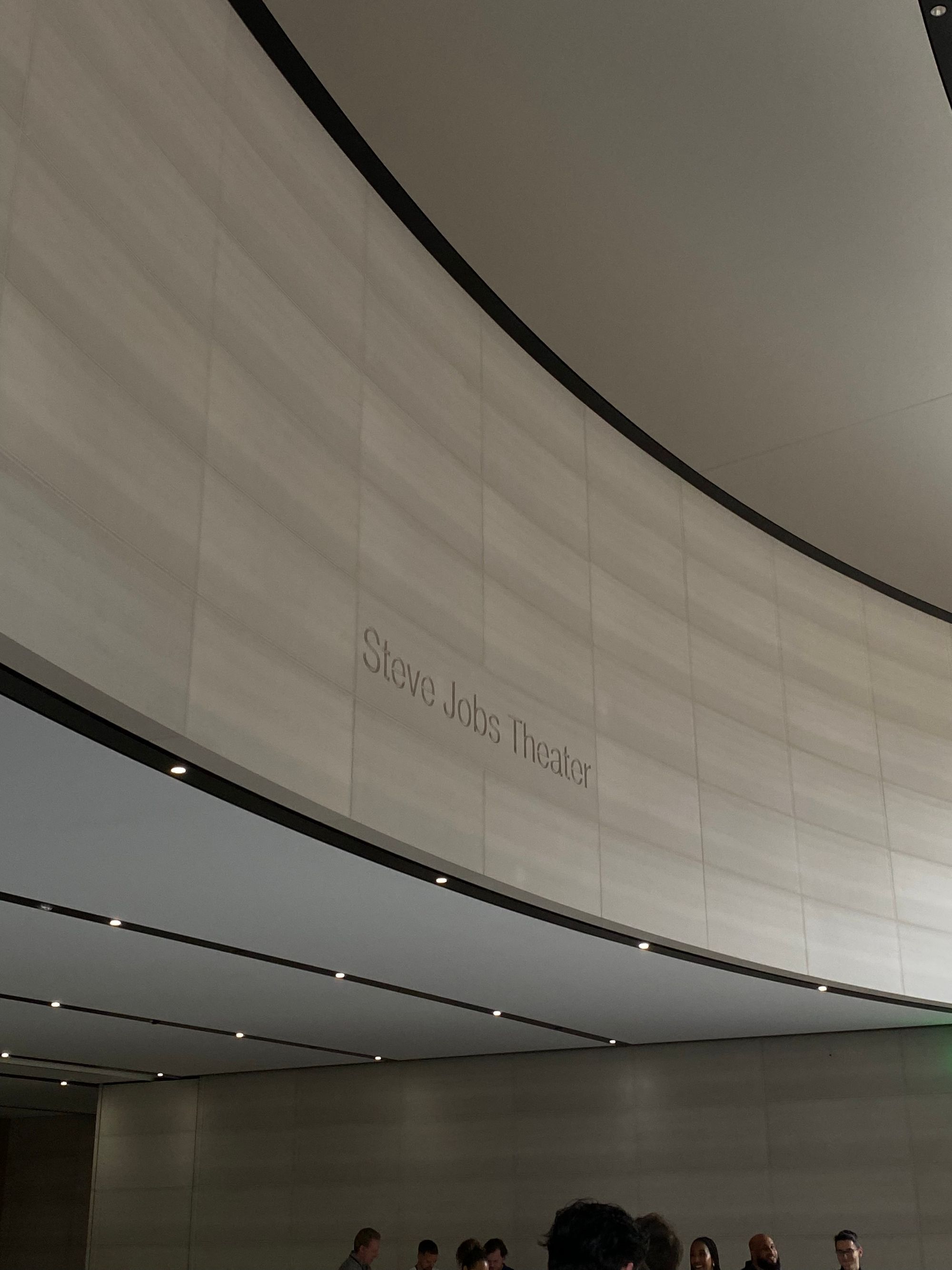
Outside, a beautiful and serene view of the entire Apple Park and the ring opened up. The silence in the building along with the noise of trees and grass from the wind gave even more drama to what was happening.
I still don’t understand what it was.
Inside, ambient music filled the space. Apple employees lined the entire first floor, welcoming everyone who passed. Every product from the keynote was on display around the room — except the Vision Pro.
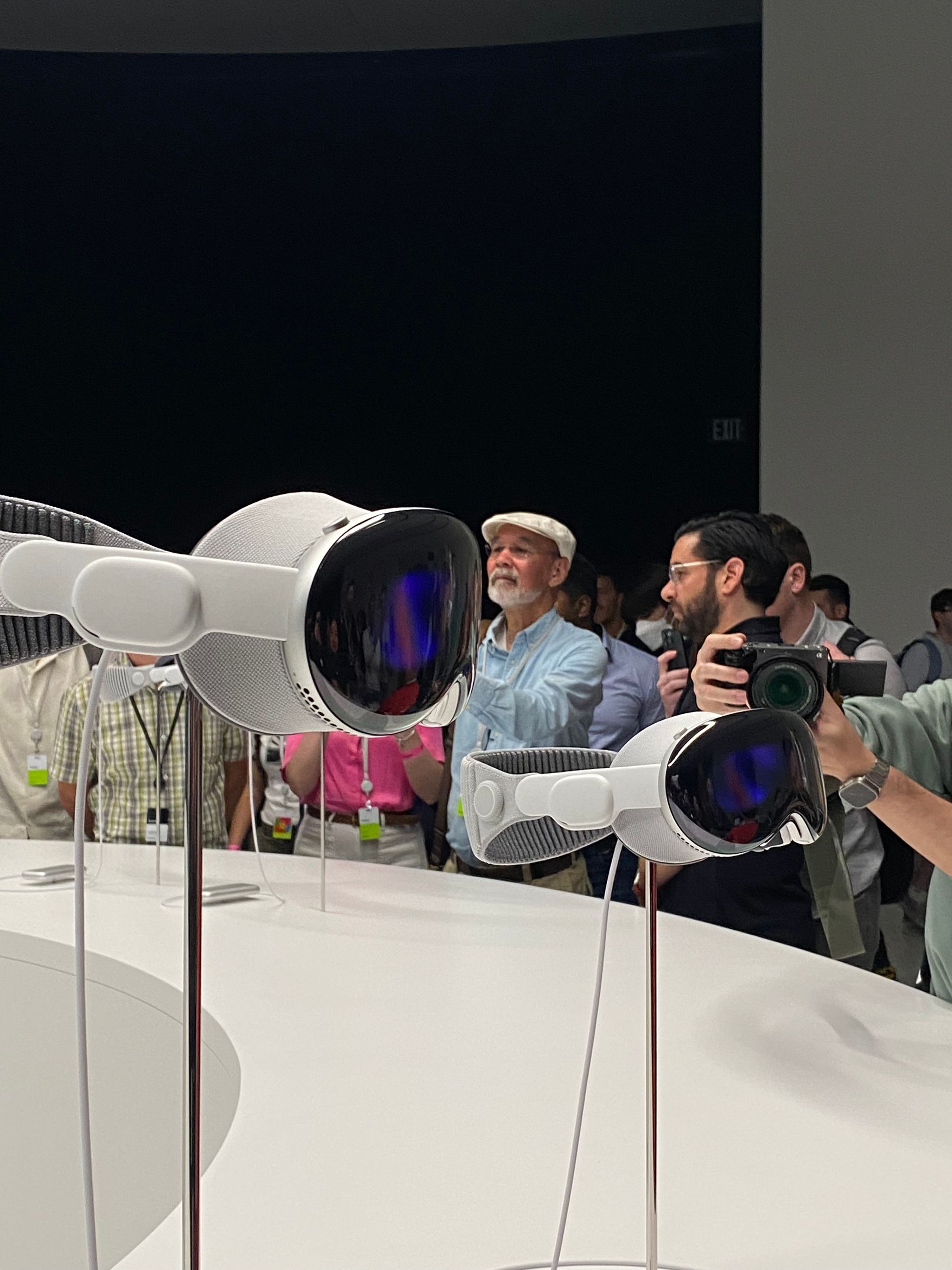
We circled the floor, then followed each other down in one continuous stream. At the bottom: a small, perfectly lit room with the glasses on a dedicated stand.
An Apple employee and security stood beside each device — but the whole atmosphere was warm and relaxed. Taken together, it hit me just as hard as the keynote itself.
Vision Pro Experience
The hands-on experience with Vision Pro was truly remarkable. Here’s a glimpse of what the demonstration looked like:
The Café Experience Again
I wanted to wring every last bit out of the day, so I headed back to the café while most people called it a night. A light dinner was waiting — mini crab burgers, vegetables, and drinks: beer, sparkling wine, still wine.
By that point, it was mostly employees and organizers left. They’d formed something like an informal receiving line — everyone relaxed, laughing, genuinely grateful for each other.
Technical Sessions
The next day, presentations from various teams began. They could already be watched online, although the schedule implied a second offline day on campus. There were 175 video presentations in total.
The technical depth of these sessions was impressive. Topics ranged from:
- SwiftUI advanced techniques
- Core ML and machine learning integration
- ARKit and spatial computing concepts
- Performance optimization across all platforms
- Accessibility best practices
Each session felt like a masterclass, delivered by the people who actually built these technologies.
Ideas and Partnership
I wrote this not just to share the experience, but to say something about who we are at Open Media: we look to companies like Apple for inspiration — their culture, their standards, their way of thinking about what matters. We try to stay ahead of where our industry is heading.
One of the Vision Pro demo labs is in Munich, which happens to be right near our German office. So if you have ideas or projects where spatial interfaces could genuinely shine, reach out with the subject line “Vision Pro Partnership.”
We’re open to new ideas and collaborations — and happy to help with development, design, and getting your project in front of a global audience.
Reflections
Attending WWDC was more than just a professional development opportunity — it was a glimpse into Apple’s vision of the future. The attention to detail, the focus on user experience, and the commitment to quality were evident in every aspect of the event.
What struck me most was how Apple thinks about technology not as an end in itself, but as a means to enhance human capability and creativity. This philosophy permeates everything they do, from the design of their products to the way they organize events like WWDC.
For someone working in design and technology, being at WWDC was like attending a masterclass in how to think about products, users, and the future. It reinforced many of the principles we try to follow at Open Media and gave us new ideas for how we can improve our own work.
The Vision Pro announcement, in particular, opened up new possibilities for spatial design that we’re only beginning to explore. The potential for creating truly immersive, intuitive interfaces is enormous, and I’m excited to see how this technology evolves.
Have an idea
worth shaping?
I help founders turn early signals into clear, usable products - from product direction and UX to interface design, frontend, and AI-powered workflows.
My work has helped products reach millions of users and has been featured in Forbes, Billboard, The Times, Webby Award, PCMag, TNW, Tech Advisor, MusicRadar, Golden Kitty Award, International Sound Awards, and Lovie Awards.


